
Fit and Sizing · 3 min read
By AuraMade ·
6mm vs 8mm vs 10mm Crystal Beads: How to Choose
Choose 6mm beads for a delicate, lower-profile bracelet, 8mm for a balanced everyday scale, and 10mm when the stones should make a stronger visual statement. Bead diameter also changes weight, surface detail, the number of beads, and how the pattern wraps around the wrist.
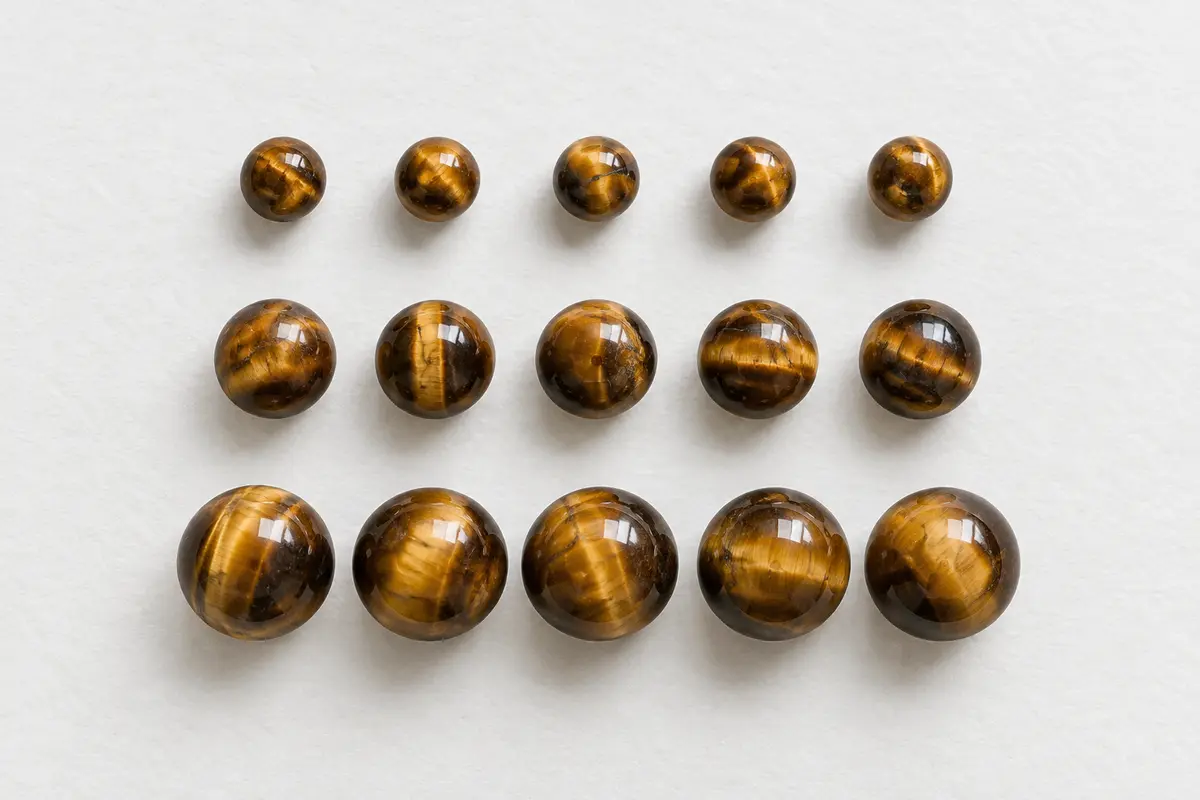
Compare 6mm, 8mm, and 10mm beads at a glance
| Size | Visual scale | Layering | Stone detail | Daily feel |
|---|---|---|---|---|
| 6mm | Delicate and quiet | Easy beside a watch or other bracelets | Less surface visible per bead | Lower profile during desk work |
| 8mm | Balanced and noticeable | Works alone or in a restrained stack | Clear view of color and pattern | Versatile everyday starting point |
| 10mm | Bold and substantial | Usually leads the stack | More surface visible per bead | More noticeable during movement |
Choose 6mm for a delicate, easy-to-layer bracelet
Six-millimeter beads create a finer rhythm with more individual pieces around the wrist. They leave visual room for a small charm and generally sit more quietly beside a watch or smooth metal bracelet.
Choose 6mm when you want color and texture to stay subtle or when a lower profile matters during typing and long-sleeve wear.
Choose 8mm for a balanced everyday scale
Eight-millimeter beads show natural color and pattern clearly without automatically dominating the wrist. The size can work as a single bracelet or as the main piece in a restrained stack.
It is a useful comparison starting point, not a universal safest choice. The intended wrist, nearby jewelry, and daily routine still determine whether 6mm or 10mm feels better.
Choose 10mm when the stones should lead
Ten-millimeter beads reveal more surface area and give a simple palette stronger presence. Fewer beads may be needed around the same wrist, so the pattern and focal position can change.
Check the physical feel as well as the look. Larger beads can be more noticeable during typing, exercise, travel, or under fitted sleeves.
Bead size changes the complete bracelet pattern
Changing diameter does not simply scale the same preview. It changes how many stones and accessories fit around the wrist, how often an alternating formula can repeat, and where the focal bead lands.
Choose size before refining the sequence. After changing size, review the full circle and rebuild the repetition instead of assuming the old pattern still fits.
Compare bead size with the intended wrist
Avoid rules that assign one bead size to a gender, age, or wrist category. On any wrist, 6mm reads as more delicate and 10mm as more pronounced; personal style and routine matter more than demographic assumptions.
Measure the raw wrist circumference, select the bead size, and compare the completed design's recommended wrist range before saving.
Crystal bead size questions
Is 8mm always the best bead size?
No. It is a balanced comparison point, but 6mm may suit layering and desk work better, while 10mm may suit a bracelet intended to stand alone.
Do larger beads make a bracelet heavier?
Usually they increase physical presence and can add weight, but stone density, bead count, and accessories also affect the finished feel.
Can different bead sizes be mixed?
Only when the available materials and Builder support the combination. Mixed diameters change spacing and fit, so review the complete sequence rather than treating each bead independently.
Does bead count indicate quality?
No. Smaller beads may require more pieces and larger beads fewer pieces. Material quality, design, comfort, and finish are more useful comparisons than count alone.